
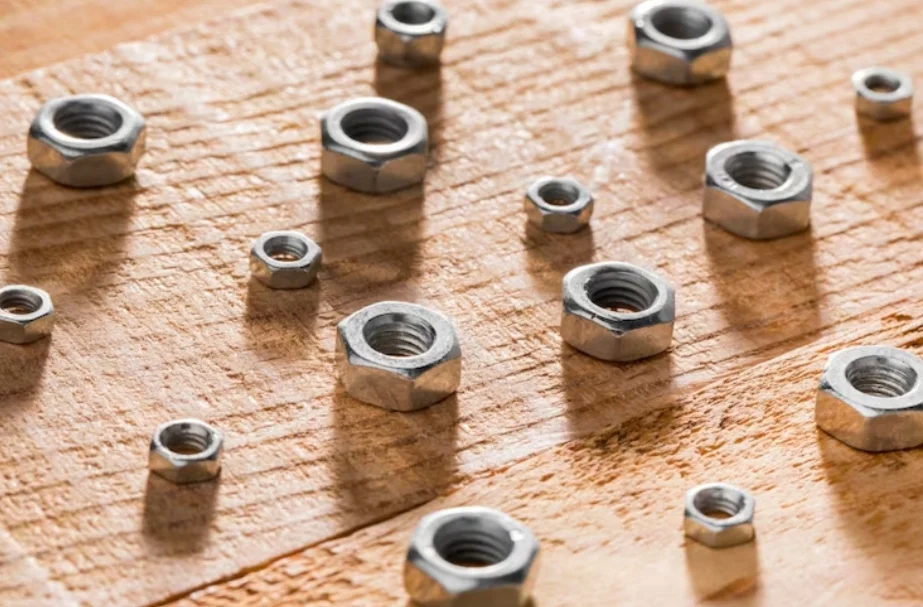
Bolts and nuts seem simple enough accessories to be used for various machines. You twist them together, they hold things in place, and that’s that.
But here’s the thing. Choose the wrong type, and you might be looking at a catastrophic failure down the line. Maybe not today, maybe not next week, but eventually things might start falling apart. The bolt loosens, the joint weakens, and what seemed solid starts to come apart.
Bolts and nuts form the backbone of nearly every mechanical assembly you can think of. From the car you drive to the buildings you work in, these fasteners find a use everywhere. Yet most people don’t give them a second thought until something goes wrong.
And when it does go wrong, it’s rarely a minor inconvenience.
What Makes Bolts and Nuts Different
Let’s start with the basics. A bolt is a threaded fastener with a head on one end. A nut is a small metal block with a threaded hole that screws onto the bolt. Together, they create a clamping force that holds materials together.
Sounds straightforward, right?
The problem is that not all bolts are created equal. Neither are nuts. The materials used, thread patterns, and grades all vary. Pick the wrong combination and you’re asking for trouble.
Self-tapping screws work differently because they create their own threads as they’re driven in. Bolts, on the other hand, require pre-drilled holes and matching nuts. This gives you more control over the joint, but also means more room for error.
Common Types You’ll Encounter
- Hex bolts are probably what you picture when you think of a bolt. Six-sided head, external threading, simple to use. They’re everywhere because they work for most general purposes.
- Carriage bolts have a rounded head and a square section beneath it. That square part stops the bolt from spinning when you tighten the nut. You’ll see these a lot in woodworking.
- Eye bolts have a loop instead of a standard head. Useful when you need to attach cables or ropes, though they’re not meant for side loading.
- Stud bolts are threaded on both ends with no head at all. One end screws into a tapped hole, the other takes a nut. These are common in bolted joints where you need repeated assembly and disassembly.
Each type serves a specific purpose. Using a hex bolt where you need a carriage bolt might work initially, but it won’t last.
Material Matters More Than You Think
- Steel is the default choice for most applications. It’s strong, readily available, and cost-effective. But steel rusts. Leave it exposed to moisture and you’ll have problems.
- Stainless steel resists corrosion much better. The trade-off? It costs more and isn’t quite as strong as regular steel for the same size. You’ll find stainless fasteners in marine environments or anywhere moisture is a concern.
- Galvanised steel offers a middle ground. A zinc coating protects the underlying steel from rust. Not perfect, but better than bare steel in damp conditions.
- Brass and bronze resist corrosion well and won’t spark. That makes them useful in explosive environments or around certain chemicals. They’re softer than steel, so they’re not suitable for high-stress applications.
- Titanium is incredibly strong for its weight and highly corrosion-resistant. It’s also expensive. You’ll see titanium fasteners in aerospace and high-performance automotive work, but rarely anywhere else.
The material you choose affects everything. Strength, weight, cost, lifespan. Get it wrong and you’ll either overpay for capabilities you don’t need or underpay and watch things fall apart.
Thread Types and Why They Matter
- Coarse threads are the standard. They’re easier to install, more forgiving with slightly damaged threads, and work well in softer materials. They’re also more resistant to vibration loosening, which matters in machinery.
- Fine threads provide more precise adjustment and create more clamping force in the same diameter. They’re common in automotive work where space is tight and loads are high.
- Then there’s metric versus imperial. Mixing them is a disaster waiting to happen. A metric bolt might thread into an imperial nut for a turn or two, but the threads won’t seat properly. That joint will fail.
Always match your thread type to the application. Forcing the wrong fastener into place is asking for stripped threads or worse.
Grade Specifications Tell You What to Expect
Bolt grades indicate tensile strength. Higher grades handle more stress before breaking or permanently deforming.
- Grade 2 bolts are basic. Low-carbon steel is suitable for light-duty applications where failure isn’t catastrophic.
- Grade 5 bolts are medium strength. These work for general automotive and machinery applications. You’ll recognise them by three radial lines on the head.
- Grade 8 bolts are high-strength. Six radial lines on the head. Use these where loads are substantial and failure would be dangerous.
- Metric grades work differently. An 8.8 bolt has a tensile strength of 800 megapascals, with the second number indicating yield strength as a percentage of tensile strength.
Using a lower grade than needed is obvious foolishness. But overspecifying wastes money and can sometimes cause other issues. High-strength bolts may require specific installation procedures or create problems with mismatched materials.
Proper Installation Prevents Most Failures
Torque matters. Too little and the joint loosens over time. Too much and you risk stripping threads or breaking the bolt entirely.
Thread engagement is critical, too. You need at least one full diameter of thread engagement in most cases. Less than that and you’re relying on too few threads to carry the load.
Washers distribute the load and prevent the nut from digging into softer materials. Lock washers add friction to resist loosening from vibration. Don’t skip them in applications where they matter.
Thread lubricants reduce friction during installation, which means more of your torque goes into creating clamping force rather than overcoming friction. But be careful. Some applications specifically call for dry threads.
When Bolts and Nuts Fail
Loosening from vibration is probably the most common failure mode. The fastener backs out gradually until there’s no clamping force left.
Corrosion weakens fasteners and makes removal difficult or impossible. You’ve probably seen bolts that have rusted to the point where the heads break off when you try to remove them.
Fatigue failure happens when cyclic loading gradually creates cracks that grow until the fastener breaks. This is particularly nasty because there’s often no warning.
Overload failure is more straightforward. You exceeded the bolt’s capacity, and it broke. Perhaps you used the wrong grade, or perhaps the design was flawed from the start.
Cross-threading ruins both the bolt and nut. Once threads are damaged, the joint will never be as strong as it should be.
Matching Bolts to Applications
Construction work typically uses galvanised hex bolts with coarse threads. They’re forgiving, strong enough, and resist corrosion from weather exposure.
Automotive applications often require fine-thread fasteners in higher grades. Space is limited, loads are high, and vibration is constant.
Aerospace demands the highest standards. Titanium or high-grade stainless, precise torque specifications, and detailed tracking of every fastener’s history.
Machinery maintenance requires thinking about future disassembly. Will someone need to remove this bolt in five years? Choose materials and coatings that won’t seize up.
The Hidden Cost of Getting It Wrong
A failed fastener rarely costs just the price of the bolt and nut. There’s the labour to fix it, the potential damage to surrounding components, and the downtime while repairs happen.
In critical applications, failure can mean injury or death. That’s why building codes and engineering standards specify fastener requirements so carefully.
Even in less critical situations, using incorrect fasteners creates hassle. Stripped threads, broken bolts, joints that come loose. All are avoidable with proper selection and installation.
Final Thoughts
Bolts and nuts are simple in concept but complex in application. The right choice depends on loads, materials, environment, and future maintenance needs.
With 65+ years of manufacturing expertise, the fastener industry has developed solutions for nearly every conceivable application. The knowledge exists. The challenge is applying it correctly.
Take time to understand what you’re trying to fasten and what forces it will face. Choose appropriate materials and grades. Install fasteners correctly with proper torque and thread engagement.
Your mechanical assemblies will be stronger and last longer. That’s worth the extra thought.


